
Road Trip Ready? My Free Multipoint Inspection Turned Into a Real Lesson
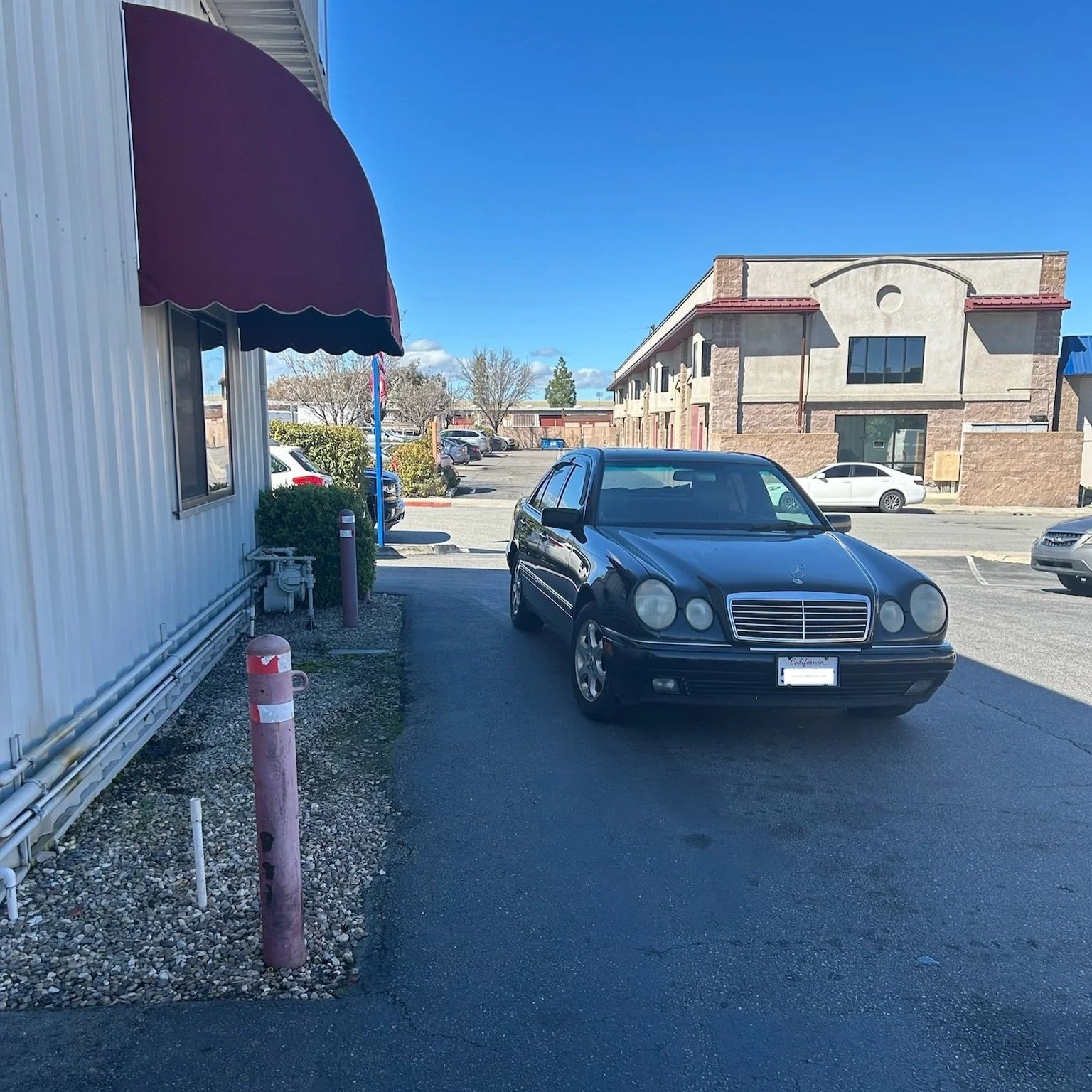
I've owned my 1998 Mercedes-Benz E320 for about 2 years. It's got over 243,000 miles on it, and I'll be the first to tell you it still runs like it has something to prove. Since owning it, I've learned its quirks, done my share of wrenching, and stayed on top of the basics. I'm not the guy who ignores a rattle or skips an oil change. So when I dropped it off with Juan at APS Automotive in Atascadero before an upcoming 8-hour road trip, I wasn't expecting much to come back on the inspection.
I asked for their free multipoint, here is what it includes. A Visual once-over covering:
Fluids
Belts
Hoses
Wipers
Battery
Air filter
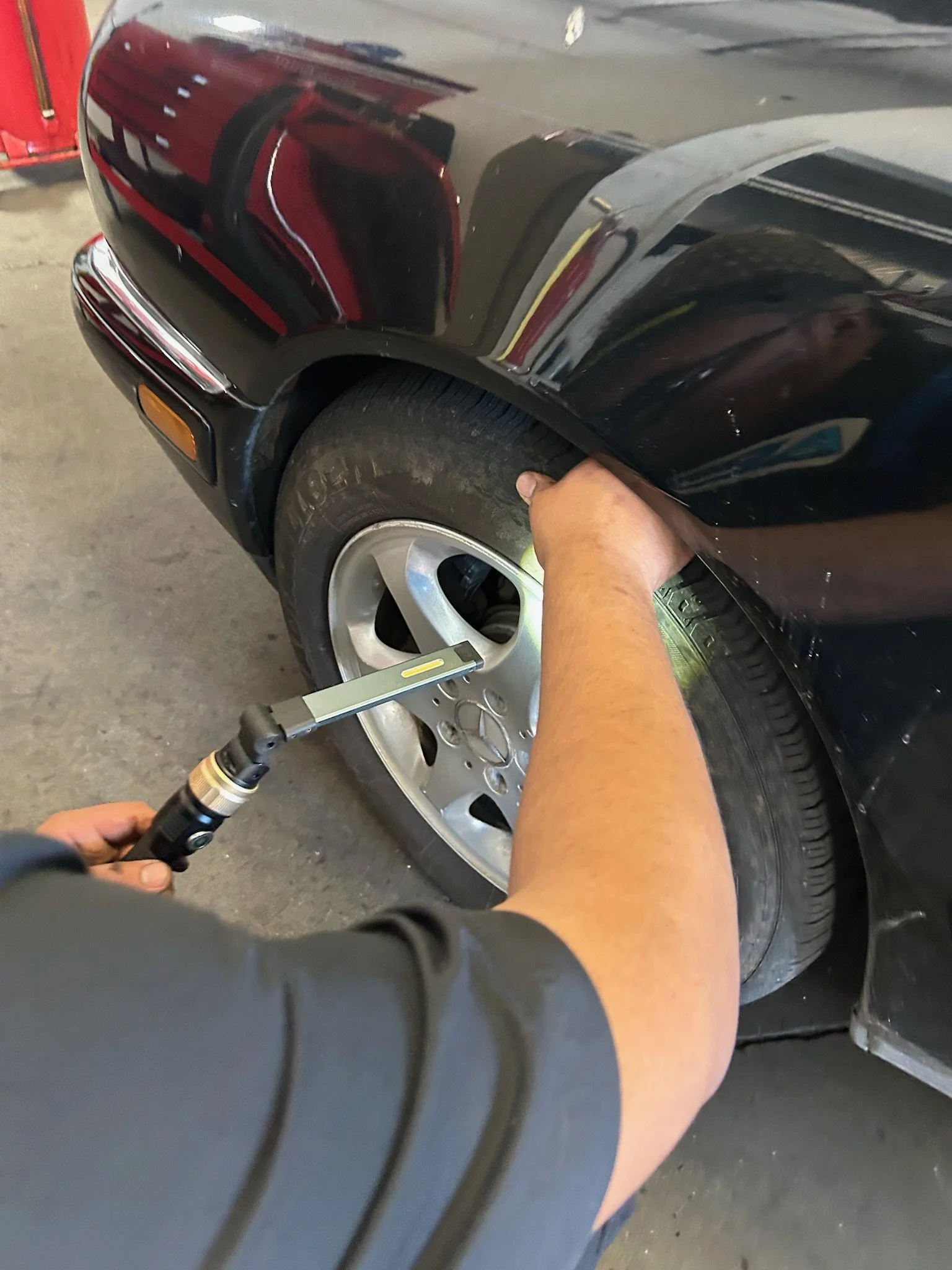
Tires
Brakes
A sanity check before putting serious highway miles on the car. Something to either give me a green light or flag anything obvious. I figured they'd tell me what I already knew. I was wrong about two things.
What I Brought In Knowing
The oil leak wasn't a shock. I've been tracking a slow seep for a while, nothing dramatic, just enough to leave a faint mark on the driveway after a few days. I knew I'd have to deal with it eventually, and I'd been monitoring the level pretty well. Before a long drive though, I wanted someone to get eyes on it and tell me exactly where it was coming from. That's the kind of thing that's hard to pinpoint yourself without a lift. Everything else on the car I felt good about. I'd replaced fluids on schedule. I knew my tire tread. The battery had been tested not long before. The E320 felt strong, smooth at highway speed, brakes responsive, no warning lights, (except the SRS due to a bad sensor).
The Two Things I Didn't See Coming
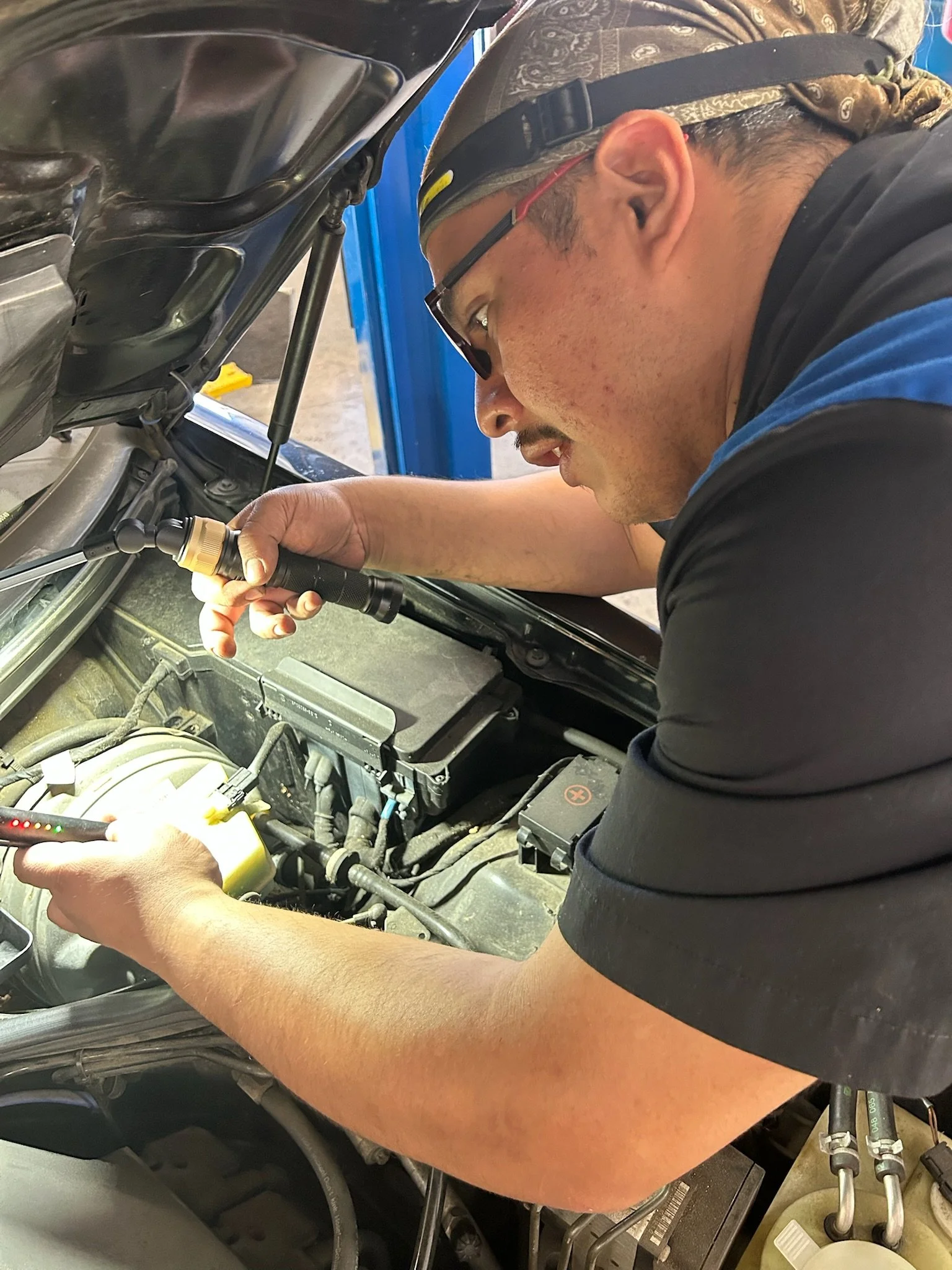
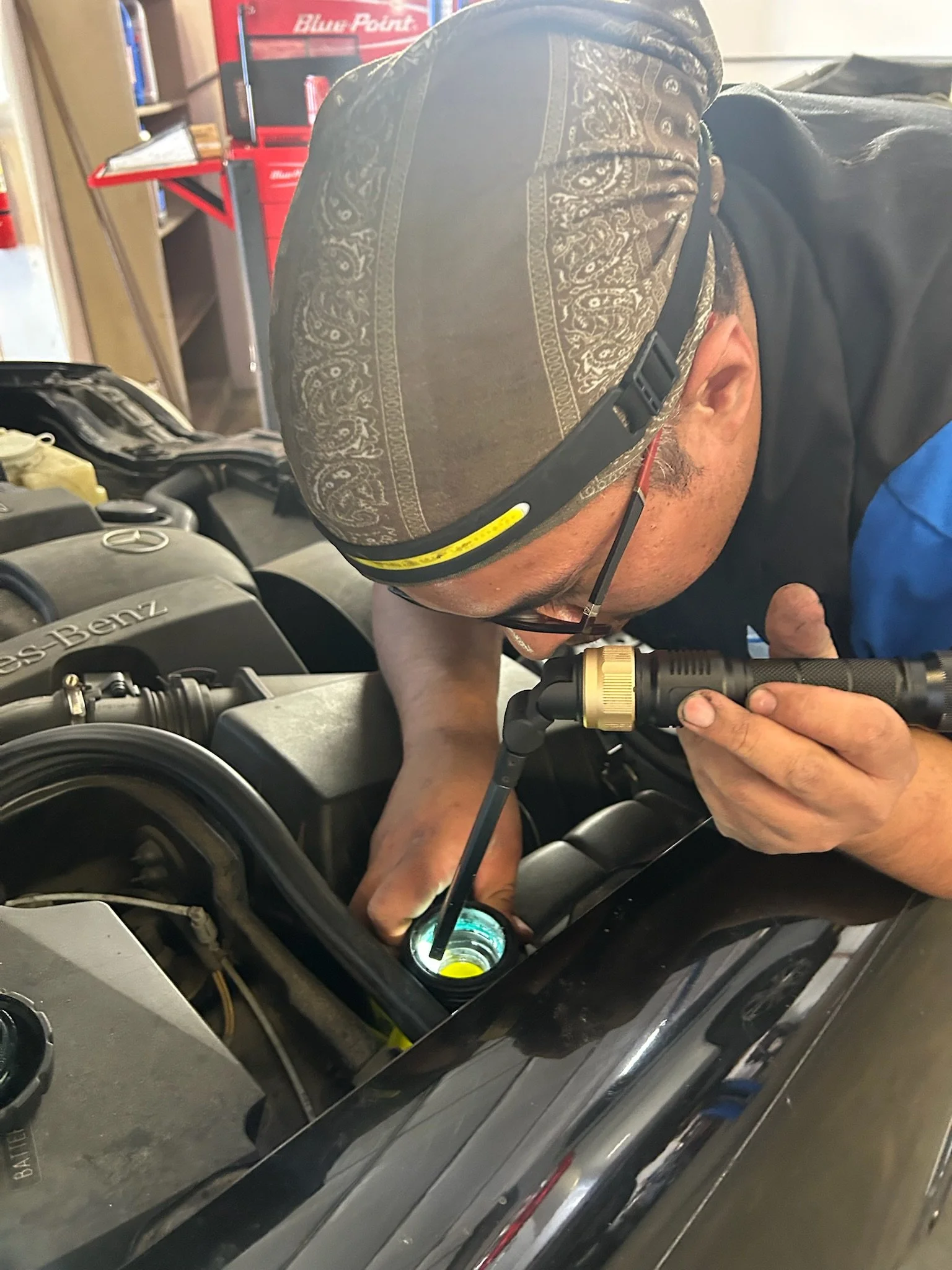
The brake fluid. This one genuinely surprised me. My brake pedal felt fine. Firm, responsive, no sponginess. But Juan tested the moisture content of the fluid and it came back at 4%. That doesn't sound like much until you understand what it means. Brake fluid is hygroscopic and absorbs water from the atmosphere over time. Fresh DOT 4 fluid starts with essentially zero moisture. Once that moisture content climbs, the fluid's boiling point drops significantly. On a normal commute, that might not matter. But on an 8-hour drive through mountain grades, with sustained braking on descents, you can push fluid temperatures high enough that moisture-laden fluid starts to boil. Boiling fluid creates vapor pockets in the lines. Vapor compresses. Pedal goes soft. That's when a firm pedal stops being reliable, right when you need it most. Four percent is past the threshold where most manufacturers and shops recommend a flush. I'd had no symptoms. The fluid looked fine to the eye. This is exactly the kind of thing you can't feel until it's a problem, and that's not a position you want to be in descending a grade at highway speed.
The serpentine belt.The E320 runs a separate auxiliary fan drive belt, and it was showing its age. The words were wearing off, but no cracks, Juan said it might explain the squeak I just started hearing during warm oup. visible wear. The belt was still doing its job. But a serpentine belt that fails on a long highway drive doesn't give you a warning. The cooling fan stops working, the alternator stops charging, and you're pulling over in the middle of nowhere trying to figure out why everything just went sideways at once. I know belts age. I just hadn't looked at this one closely enough recently. That's on me.
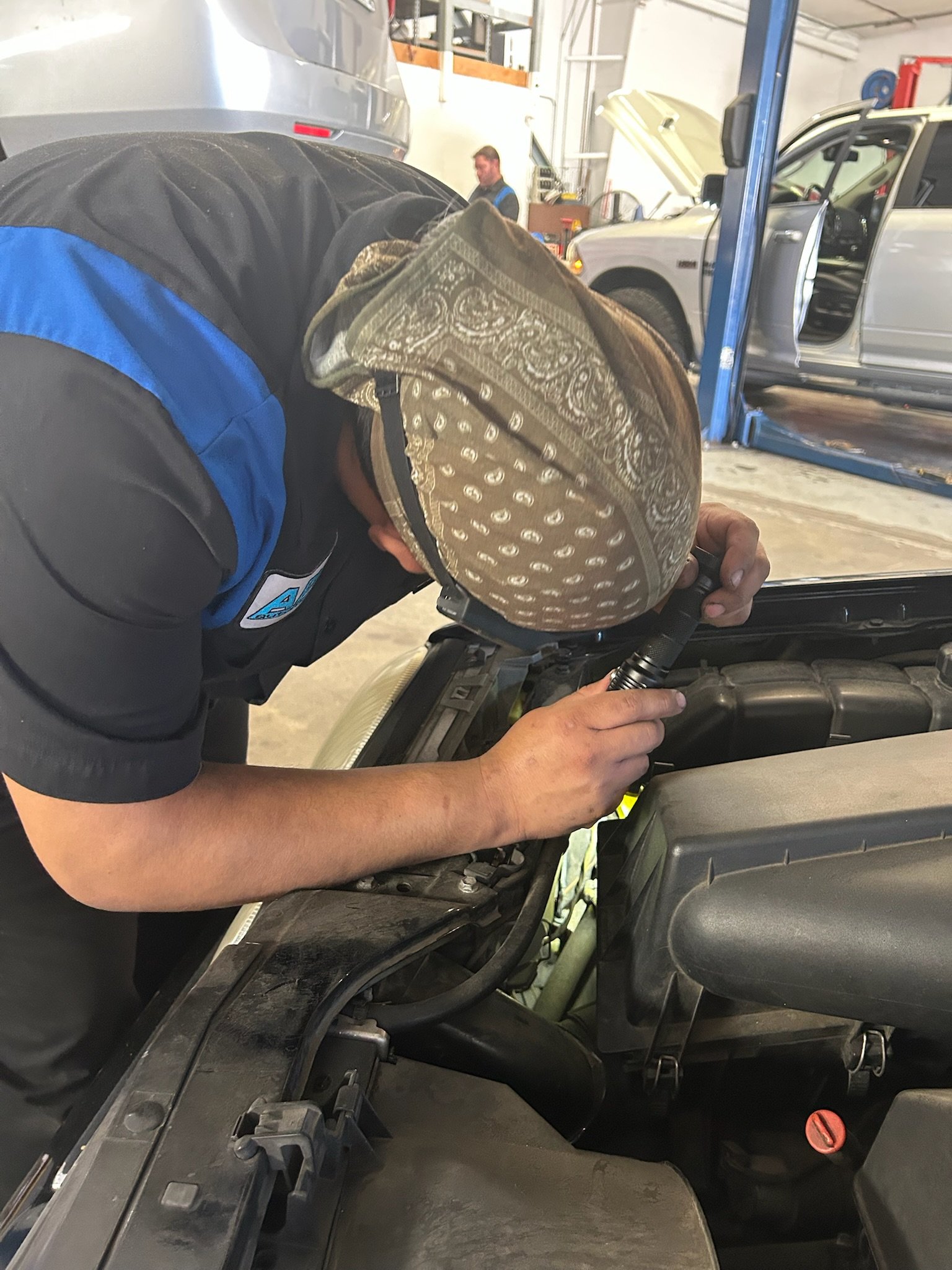
What the Inspection Actually Gave Me
The rest of the car checked out pretty good. The oil leak seems pretty bad from the driver side, worse than I realized actually. Fluid levels, battery, tires, wipers, hoses, all within normal range. The free inspection cost me nothing and gave me two concrete items I would not have caught on my own before the trip. The brake fluid moisture isn't something you can assess visually or by feel. The belt wear isn't dramatic. It's the kind of thing that fails without warning rather than getting progressively worse in a way you'd notice. I should probably get the fluid flushed, the belt replaced, and the oil leak source diagnosed before hitting the road. Total peace of mind for an 8-hour drive in a 28-year-old car.
The Takeaway: I thought I knew this car.
And I do know it well. But some things require a lift, a trained eye, and a moisture tester. The multipoint inspection isn't about assuming you don't know your car. It's about catching the things that routine ownership genuinely can't surface. If you're planning a long drive and you haven't had eyes on your car recently, get the inspection done. It's free, it takes half an hour, and the two things it found on my E320 were exactly the two things that could have turned a road trip into a roadside emergency.